When I was 14, I scraped together enough money to buy a GBA. It came with one game that I played for ages: Yoshi’s Island: Super Mario Advance 3. For a long time it was the only game I owned, and I played it to death.
Time went by, life happened: college, work, etc. Before I knew it I had a few years behind me and a long list of games I wanted to play and never did. So, many years later, I decided to give it another shot and buy (and play) the relics I’d always wanted.
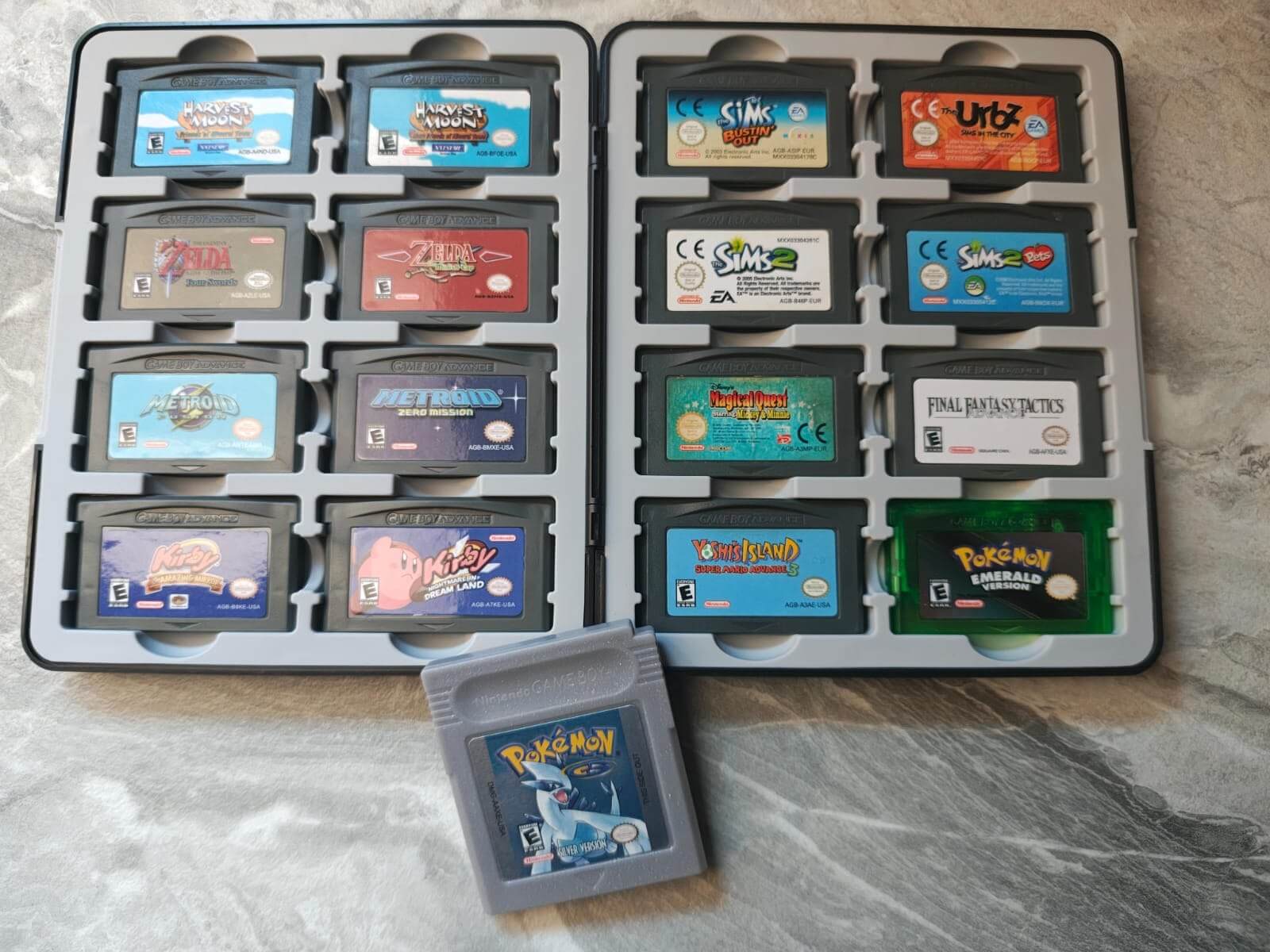
Besides liking the GBA and its games, playing an old console in 2026 is very different from playing modern games, for a few reasons:
- Most of it is offline. Multiplayer is usually optional, when it exists at all
- Picking an old game means physically holding it
- Turn on the console, the game starts
- Shallow tutorials (if any) that make you play to figure out the mechanics
To me, it’s another way of disconnecting a bit from the online world.
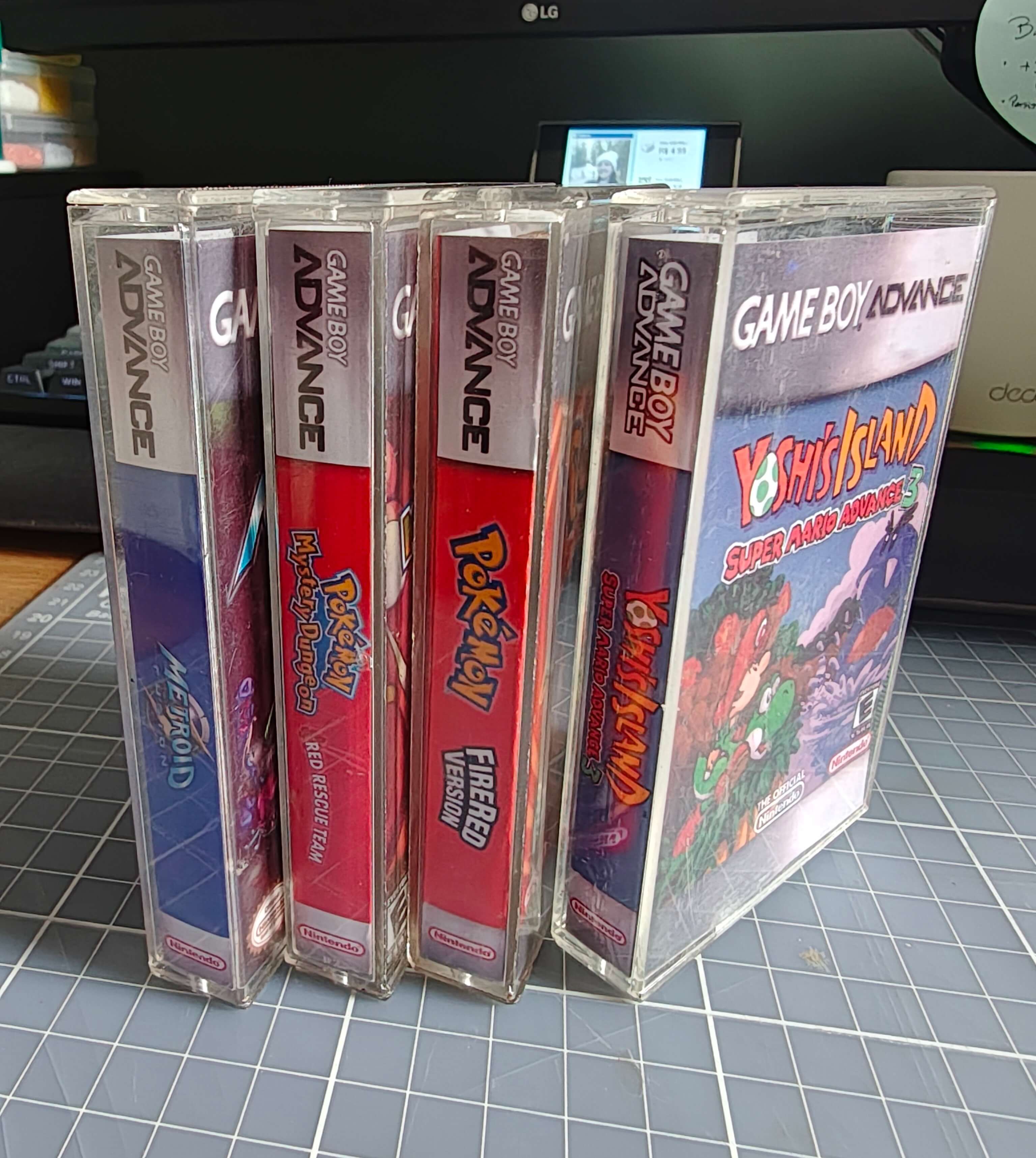
I remember seeing people online reuse cassette tape cases to store their games. I made a few and I’m in love with how they turned out. I’m trying to make one for every game I have, but the cases are really hard to find. If you have some lying around and aren’t using them, say hi? 😉
I have this habit of building something around the things I like. I’ve built a videogame with a Raspberry Pi, made React95 and, more recently, Alexo. So it was only a matter of time before this thought showed up:
I’m going to make a GBA game
With the idea and the will to learn, I decided to find out how hard it was.
It is.
The tools
To build a GBA game I had to accept that the platform is nothing like what I’m used to. On the web I have a whole computer at my disposal, with endless features and possibilities. The GBA changes all of that: less memory, a tiny screen, less processing power, and so on.
There’s a lot of documentation out there for making GBA games, plus libraries and tools written in all sorts of languages. Out of the options, I picked Butano, a C++ engine for the GBA. The last time I touched C++ was many years ago, so I know I’ll have a lot to review and relearn. Following Butano’s suggestions, I’m using Qt Creator as my editor and mGBA as my emulator. They integrate really well, and it makes development a lot nicer.
Setting up the environment isn’t exactly trivial, but once it was done, I naively figured that starting to write code would be easy.
Hello World
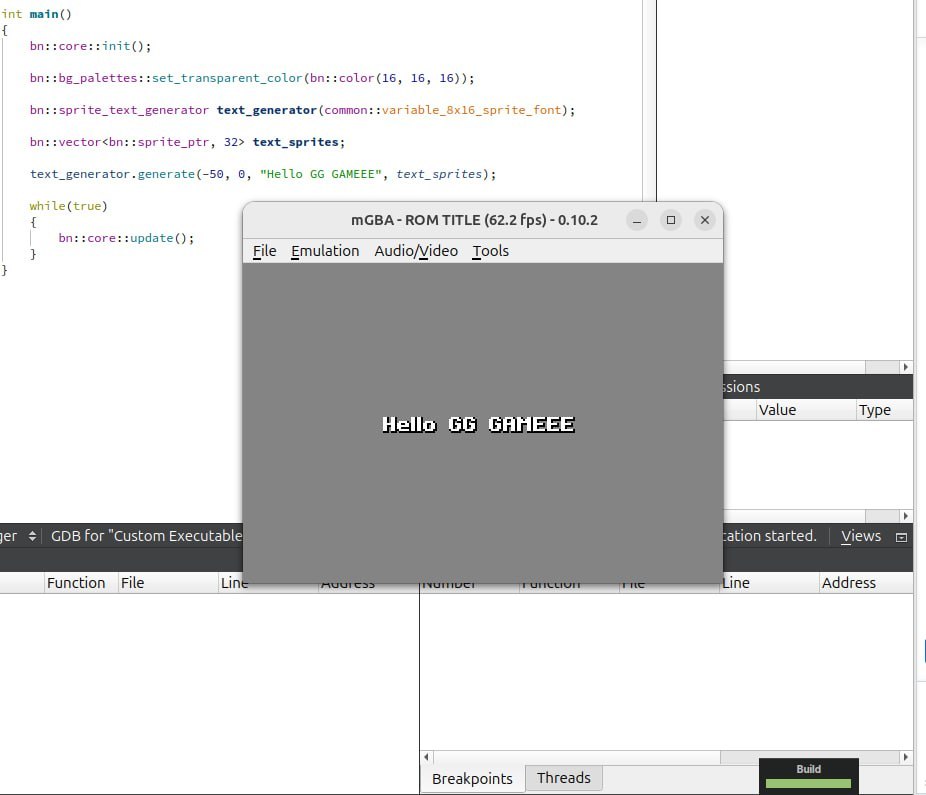
I decided to start where everyone in tech starts: with “Hello World”. The first one was a log, the way I’d do it in any other language. I compiled it, ran it and nothing happened. The emulator screen stayed empty. It didn’t feel like I was saying hi to any world at all, you know? Later I found out mGBA has a section just for viewing logs, but either way, seeing the text running in the ROM is a lot better.
So I decided to write straight to the screen. Except that on the GBA, text turns into a bunch of sprites, with each letter drawn from an 8x16 pixel font. I took the code from one of Butano’s own examples, pasted it into my project, and it didn’t work. The Makefile in the template Butano gives you doesn’t include all the assets the examples use, and I couldn’t find anything warning me to watch out for that. Maybe someone with C++ experience would breeze through it, but I struggled. After a lot of trial and error, “Hello GG GAMEEE” showed up in mGBA, and even though it’s VERY simple, I was really happy with it. Now it actually felt like someone was saying hi.
Learning has been the hardest part, and the Makefile was just one example. There’s nothing like the React docs, walking you through things step by step. You end up following examples instead of tutorials, and it’s not always easy to take code from a finished game and adapt it to what you’re building.
There’s still a lot to do, but at least I’ve started.
At 14, I spent hours with a single Yoshi’s Island cartridge. I never imagined I’d one day see my own text running in a GBA ROM, even if it’s just a hi. So far it’s been fun, and as long as it stays that way, I’ll keep going.
Maybe I’ll keep posting about the game here. In the meantime, I’ll be playing the cartridges in my collection and trying to get mine to say something other than hi.